
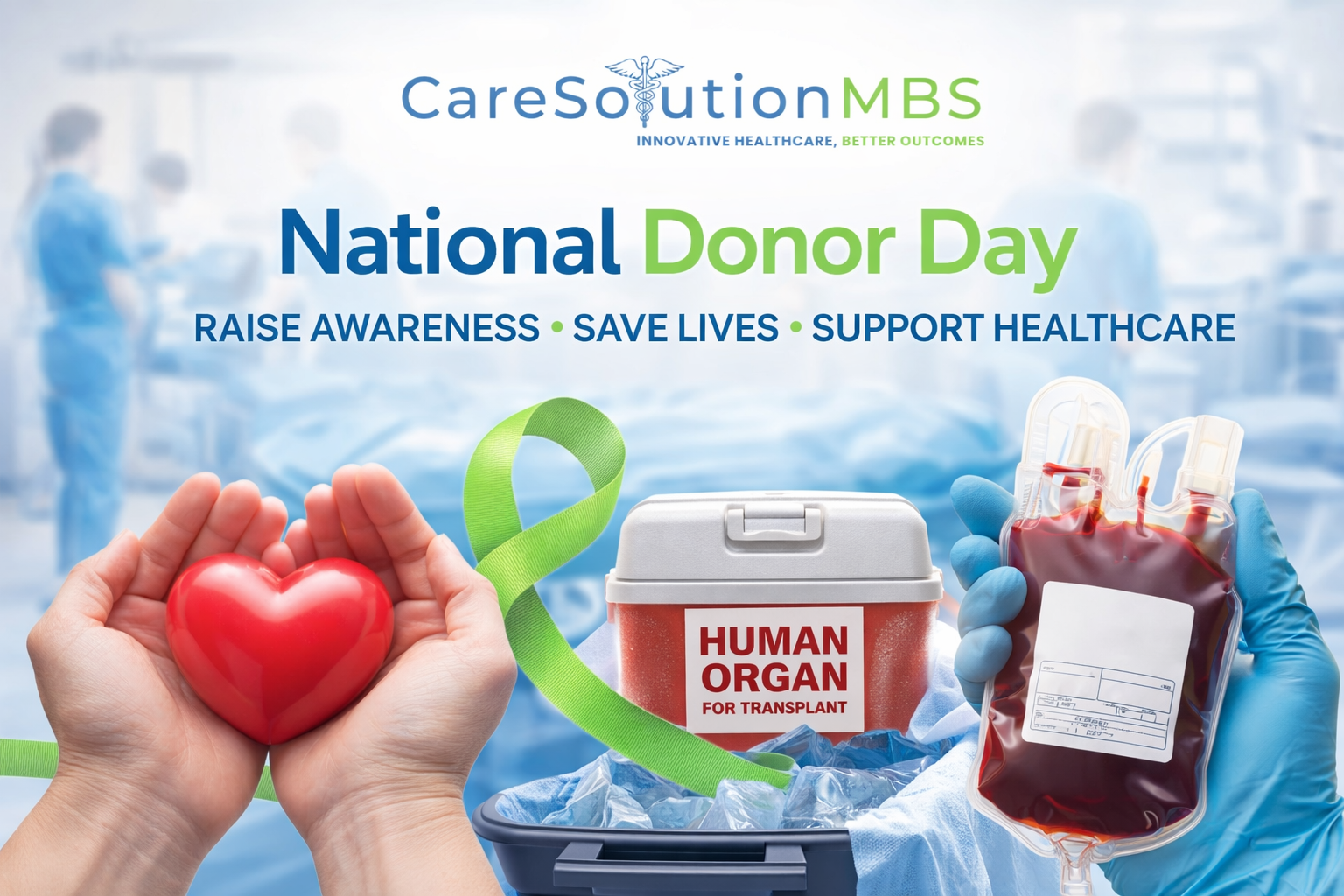
National Donor Day is a significant day of celebration that aims to encourage the practice of organ, blood and stem cells donation as well as honoring those who offer others another chance to live. The day is celebrated every year on the 14th of February This day celebrates the power of generosity, compassion as well as the value of community-driven health care.
In CareSolution MBS We recognize the fact that healthcare isn’t just about treatment for medical conditions, but it is it is also concerning the systems supporting vital services. From registration of donors to procedures for transplants as well as medical billing all aspects of the healthcare system must work efficiently in order to make sure patients get timely medical attention.
What Is National Donor Day?
National Donor Day is a nationwide awareness program designed in order to motivate people to be donors, and also recognize the contribution of people who have donated blood, organs, and tissue.
The day is focused on:
- Organ donation
- Blood donation
- Tissue donation
- Stem cell and bone marrow donation
The goal of all is to cut down on wait lists, and to help save lives by educating and awareness.
Why National Donor Day Is Crucial for Healthcare
A large number of patients depend on the generosity of donors to survive each year. The advancements in medicine have helped make transplants safer and more effective, however the shortage of donors remains a major problem.
Major Reasons This Day Matters
- The rate of success for transplants is increasing.
- Reduced waiting time for patients
- Reduced mortality due to organ failure
- Helping with emergency medical assistance
- Health promotion through prevention
Donation is among the most efficient ways to change the outcomes of healthcare.
Types of Donations and Their Life-Saving Impact
| Donation Type | Who Benefits | Medical Use | Impact |
|---|---|---|---|
| Organ Donation | Patients suffering from organ failure | Kidney, liver, heart, lungs | It can save up to eight lives. |
| Blood Donation | Trauma patients, surgeries | Transfusions, emergencies | Helps multiple patients |
| Tissue Donation | Victims of burns and injuries | Bone grafts and skin grafts | Increases mobility |
| Stem Cell Donation | Cancer patients | Leukemia treatment | The ability to cure illnesses |
| Eye Donation | Vision impaired | Corneal transplants | Restores sight |
Each gift directly improves the health efficiency and patient survival.
The Growing Demand for Donors
A variety of healthcare trends are causing increased demand for donors:
- An increase in the incidence of kidney disease and diabetes
- More accidents and trauma-related injuries
- The growth of cancer treatments that require stem cells
- People with aging populations that require transplants
In the absence of donors, many of the most advanced treatments for medical conditions wouldn’t be feasible.
How Donation Improves Healthcare Systems
National Donor Day contributes to sustainable healthcare in many ways.
Healthcare Benefits
- Faster patient recovery
- Lower long-term treatment costs
- Reduction of hospital capacity
- Increased survival rates for patients
- More options for medical treatment
Transplants are often less expensive when compared to ongoing treatment like dialysis for example and kidney transplants, which is why donation can be economically advantageous for health systems.
The Role of Medical Administration in Donor-Based Care
The life-saving processes rely heavily on the effectiveness of administration that are carried out behind the scenes.
Key Administrative Functions
- Patient insurance verification
- Documentation and medical coding
- Processing of claims
- Monitoring compliance
- Optimizing the efficiency of revenue cycles
Effective billing allows hospitals to keep providing services for transplants without the financial hurdles.
Why Awareness Campaigns Matter
The public education system dramatically boosts the number of donors who register.
Health organizations are able to raise the awareness of their patients through
- Community-based events
- Materials for teaching in the Clinic
- Social media campaigns
- Donor Registration programs
- School outreach programs
Once people realize the significance of a donation, their participation increases dramatically.
Common Myths About Donation
| Myth | Truth |
|---|---|
| Doctors will not try to save donors. | Medical teams are always focused on the saving of lives |
| The cost of donation is high. | There is no cost for donors. |
| People who are older can’t give | A lot of older adults are eligible. |
| Health conditions disqualify everyone | People with disabilities may nevertheless donate |
| Donation delays funerals | Most do not cause delays |
It helps dispel fear and misconceptions.
National Donor Day and Healthcare Financial Sustainability
The basis of treatments for patients who are based on donors is:
- Effective billing processes for accurate bill payments
- Effective claims submission
- Proper compliance documentation
- Revenue cycle management
If hospitals aren’t financially efficient, they might struggle to sustain the transplant program.
Solid administrative systems ensure that access to life-saving medical care is maintained.
SEO Semantic Keywords Integrated
- national donor day awareness
- Organ donation health system
- blood donation benefits
- Transplant medical management
- Support for healthcare billing
- Donor medical programs
- Patient survival health care
- Revenue cycle of hospitals
- Medical compliance services
- Healthcare efficiency solutions
The keywords can help increase the visibility of your search while preserving an unnatural readability.
Frequently Asked Questions (FAQs)
What exactly is National Donor Day about?
It encourages blood, organ and tissue as well as stem cell donation, while also paying tribute to donors.
Who may be a registered Donor?
Everyone, no matter their how old or what background they come from can sign up. Medical professionals determine eligibility later.
What is the cost of a donation to the donor?
No. All medical costs related to donation are fully covered.
What number of lives could an individual donor help be able to save?
Organ donors can provide lifesaving assistance to up to eight individuals and assist many others through organ donation.
Is blood donation safe?
Yes. The program follows the strictest medical safety standards.
Why are they so crucial for the field of healthcare?
They allow transplants and urgent medical care feasible, saving a lot of lives each year.
How can healthcare facilities promote awareness about donors?
Through community outreach, educational programs, outreach and registration assistance.
Can families refuse donation?
In some regions, legitimate donor registration is respected however, families are not consulted.
When is it appropriate to give blood?
The most common interval is between 8 and 12 weeks, based on the guidelines of a medical professional.
What does the administration do to support donations?
The proper documentation and billing allows hospitals to provide life-saving care.
Conclusion: A Day That Creates Hope and Healthier Communities
National Donor Day represents compassion generousity, kindness, and the profound impact that an individual can make on the lives of many people. From blood transfusions for emergencies or life-saving organ donations donors form the backbone of our modern-day healthcare.
Healthcare providers must combine the efforts to raise awareness with effective administration systems will ensure that donor-based therapies are affordable, accessible and long-lasting.
Through promoting donor education and ensuring that healthcare operations are strong We contribute to the future in which fewer patients are waiting for life-saving treatment and more families are able to experience relief and hope.


